








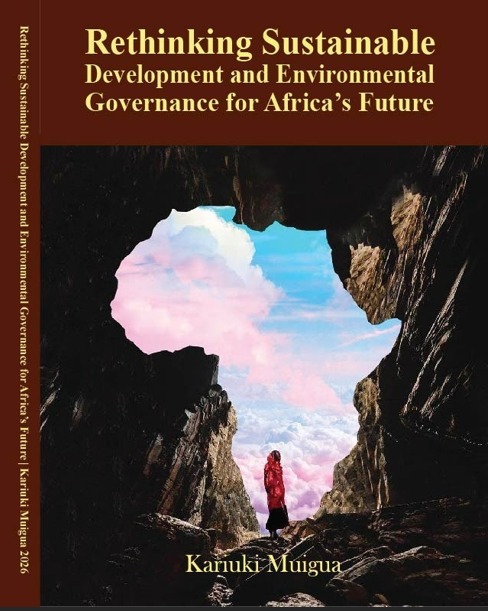
In Rethinking Sustainable Development and Environmental Governance for Africa’s Future, Prof. Kariuki Muigua SC presents a compelling and comprehensive scholarly work that challenges conventional paradigms of environmental governance and development. Published in 2026, this collection of interconnected essays centres Africa and the Global South, foregrounding the continent’s unique vulnerabilities, resources, and potential pathways toward sustainable and just futures. The book is meticulously structured into twenty-four chapters, each addressing a distinct yet interconnected dimension of environmental justice, governance, and sustainability.
Foundations: Justice, Democracy, and Resource Governance
The opening chapters lay a robust conceptual foundation. Chapter 1 examines natural resource management and the critical role of access to justice, inclusion, and environmental democracy in the Global South. Muigua argues that equitable governance and public participation are prerequisites for transforming resource wealth into sustainable development, setting the tone for the book’s justice-oriented lens.
The Centrality of Climate Justice
This focus on justice is deepened in Chapters 2 and 7, which are dedicated to climate justice. Chapter 2 provides a poignant analysis of the disproportionate impacts of climate change on Indigenous peoples in Africa, advocating for the strengthening of both formal and informal legal norms to protect their rights. Chapter 7 expands this discussion through the powerful lens of Pan-Africanism, calling for a unified African voice in global climate governance to combat structural inequalities and secure a fairer international response.
Pillars of Governance: Finance, Law, and Frameworks
A significant portion of the book is dedicated to practical governance frameworks and tools. Chapters 3 and 5 address systemic enablers of sustainability. Chapter 3 delves into the financing of National Adaptation Plans (NAPs), highlighting the chronic climate finance gap that hampers developing countries’ resilience-building efforts. Chapter 5 makes a persuasive case for investing in the environmental rule of law, positioning it as the bedrock for achieving the Sustainable Development Goals by 2030 through accountability, transparency, and the protection of environmental rights.
Applying Modern Frameworks: ESG and Carbon Markets
The author skillfully applies contemporary sustainability frameworks to African contexts. Chapters 4 and 6 explore the operationalization of ESG (Environmental, Social, and Governance) tenets and carbon justice, respectively. Chapter 4 illustrates how ESG principles can guide sustainable and conflict-sensitive extraction of Africa’s oil and gas resources. Chapter 6 offers a critical appraisal of carbon markets, warning against potential injustices and land rights violations while outlining principles for equitable community-inclusive carbon projects.
Valuing Indigenous and Local Knowledge Systems
A standout theme is the valorization of indigenous and local knowledge systems. Chapters 13 and 14 are particularly insightful in this regard. Chapter 13, “View Beyond Western Tower,” powerfully advocates for embracing Global South indigenous knowledge as a vital, yet often marginalized, repository of climate solutions and ecological wisdom. Chapter 14 argues for the formal integration of Traditional Ecological Knowledge (TEK) into environmental education curricula in Africa, promoting a culturally resonant pedagogy of sustainability.
Interdisciplinary Reach: Biodiversity, Cities, and Technology
The book also demonstrates impressive interdisciplinary reach, covering biodiversity, urbanization, and technology. Chapters 10 and 12 discuss ecosystem health and biodiversity conservation, emphasizing mainstreaming conservation into law and leveraging smart technologies like AI and remote sensing for monitoring and protection. Chapter 11 tackles urban sustainability, linking safe, resilient habitats to climate justice, while Chapter 8 presents a forward-looking analysis of employing technology and regulation to achieve a zero-waste circular economy.
Conclusion: A Call for an Integrated Paradigm Shift
Throughout the collection, Muigua’s arguments are characterized by a balanced duality: a clear-eyed recognition of Africa’s challenges—from resource conflicts and pollution to institutional weaknesses—paired with an unwavering emphasis on agency, innovation, and opportunity. The concluding chapters on multilateral cooperation, inclusive technology transfer, and protecting rights during conflict reinforce the message that sustainable development is an integrated, collaborative, and rights-based endeavour.
In essence, Rethinking Sustainable Development and Environmental Governance for Africa’s Future is more than an academic text; it is a clarion call for a paradigm shift. Prof. Muigua successfully weaves together legal analysis, policy critique, and ethical advocacy to produce a work that is both intellectually rigorous and deeply normative. It is an indispensable resource for scholars, policymakers, activists, and students committed to understanding and advancing an equitable, sustainable, and self-determined future for Africa and the broader Global South. The book’s great strength lies in its ability to be simultaneously specific in its case studies and universal in its principles of justice, inclusion, and ecological stewardship.